|
|
|
|
|
.jpg)
DEVAS Project Summary
At the beginning
of 2009 JRS-Europe and its project partners will begin a new
project that will research the conditions of detention
for vulnerable
asylum seekers
in the EU, known as the "DEVAS Project." It is partly funded by
the EU Commission and will be implemented in 23 EU Member
States.
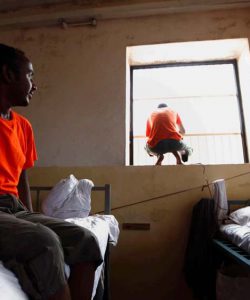
More and more, asylum seekers arriving in Europe are detained in
closed reception centres or other places of detention.
Increasingly, vulnerable asylum seekers are being detained in
these centres. The detention of vulnerable asylum seekers is a
concern because these individuals require a higher degree of
protection due to characteristics that place them at a level of
increased risk for abuse and neglect. Detained female asylum
seekers, for example, are vulnerable to physical and sexual
abuse from male detainees or male staff in the detention centre.
Women also experience medical needs, such as pregnancy, that
require specialised protection and attention. Individuals who
remain in prolonged detention may suffer from psychological
trauma as a result, not to mention potential de-skilling which
can make their integration upon release – whether in the host
country or country of origin – more difficult. Persons with
serious medical needs require specialised attention from trained
medical professionals, and some may even require 24-hour care.
Whilst all asylum seekers require the full protection of the
law, where vulnerable asylum seekers are concerned, a higher
standard of protection should be implemented.
What DEVAS proposes to do
The DEVAS Project aims to research and identify the detention
conditions and practices of 23 Member States towards vulnerable
asylum seekers. Instead of pre-identifying categories of
vulnerability, the research will determine which vulnerable
groups exist in detention. This will be achieved by focusing
strongly on the voices and experiences of detainees. Project
partners will use the same methodology to research illegally
staying third-country nationals detained in their respective
country.
The project will be lead by a steering committee whose task will
be to guide the research, to ensure its implementation and
analysis, and to see the project through to its completion at
the end of 2009. Each project partner will write a national
report, which will be published into a final regional report.
The report and its accompanying advocacy strategy will be
released to EU policy makers and other interested parties at a
conference workshop in Brussels. |
|
|
|


|