The Jesuit Refugee Service is an international Catholic organisation. Its mission is to accompany, to serve and to plead the cause of refugees and forcibly displaced people. JRS was set up by the Society of Jesus in 1980 and is now working over 50 countries worldwide. JRS works with all refugees but has a particular concern at present for the "forgotten" refugees who have moved out of the media spotlight. There are over 20 million refugees worldwide. A further 25 million people are displaced within their own countries.

JRS Europe in 2008
 

In Western Europe xenophobia and resentment against immigrants, asylum seekers and Muslims are on the rise. The church agencies that strive for harmony, integration and understanding are fighting an uphill battle. These issues have gradually come to the fore of policy making in the European Union. Between 2004 and 2007, the EU expanded from fifteen to twenty-seven member states, thus increasing the workload for the European Institutions in Brussels. As a result, the European Commission has explicitly asked for the assistance of NGOs in monitoring the implementation of EU legislation and regulations concerning migration.

This places JRS in a good position since it is one of the few agencies specialised in working with refugees and migrants that already has offices and contact persons in several of the new member states that have recently joined the EU. These include Malta, Slovenia, Poland, Slovakia, Czech Republic and Romania.

Last year [2007] for the first time in five years, the number of asylum applications in the EU increased by approximately 11%, with the largest groups of asylum applicants coming from Iraq, Russia and Pakistan.  Given current trends, many of these applicants will not be successful in their quests for asylum, and those who are faced with expulsion, will remain in Europe and will face destitution.  Unable to return home, and equally, unable to avail of basic social services in their adopted home.

It must be accepted that Europe is now a continent of immigration.  It is estimated in the coming years 44 million people will leave the labour market and that Europe will face severe labour shortages.  With rising employment, wages and falling immigration rates from Poland , Ukraine and Morocco, EU member states must embrace immigration from outside the immediate borders of the EU.    It is imperative for the welfare of immigrants, and to the benefit of European labour markets, that both migration-producing states and the European Commission make it easier for people to migrate to Europe easily.

The consequence of inaction from European institutions will mean irregular migration remains the rule, rather than the exception, bringing with it all the risks of exploitation and abuse that these migrants face on their searches for a better life.  It is ironic that while awareness is growing that Europe needs migrants, little progress is being to encourage resettlement of refugees from countries outside the EU.


In Europe, JRS works in 20 countries, including Lebanon. Activities include:
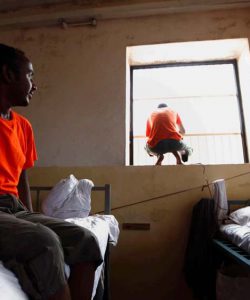
- visiting asylum seekers in detention
- giving legal advice to asylum seekers and irregular migrants
- counseling those traumatised by persecution and flight
- serving as chaplains in open reception or accommodation centres as well as in closed facilities or premises (detention)
- providing food and shelter to destitute migrants.


Our Motivation

The Jesuit Refugee Service Vision

In 2005 the Jesuit Refugee Service celebrated 25 years of existence. While the social injustice that prevails in the World gives little cause for celebration, it is however a time for reflecting on the initial vision of the organisation, which placed a special emphasis on “being with, rather than doing for” refugees. This vision complements our work of catering to the material and spiritual needs of those displaced and supporting them towards a fuller and more independent life. In this way there is a special dimension to the work of JRS, which is sometimes lacking elsewhere.

On 14th November 1980 Fr. Pedro Arrupe announced the formation of JRS, explaining that “the help needed is not only material: in a special way the Society is being called to render a service that is human, pedagogical and spiritual”. The mission of JRS is therefore to serve, to accompany and to advocate on behalf of refugees. The 1990 JRS Review expanded on this vision and the shared experience of those privileged to live and work among refugees and displaced peoples:

“We want our presence among refugees to be one of sharing with them, of accompaniment, of walking together along the same path. In so far as possible we want to feel what they have felt, suffer as they have, share the same hopes and aspirations, see the world through their eyes. We ourselves would like to become one with the refugees and displaced peoples so that, all together, we can begin the search for a new life.

This attempt to identify with the poor and rejected, however hesitant and imperfect, has brought us untold blessings. For by their very poverty, they teach us to be detached from material possessions and our own selves. Their insecurity and uncertainty about the future show us how not to rely merely on ourselves or on human planning. Their cultural values and simple dignity as human beings remind us that a person’s worth is determined by what he is rather than by what he has.

Their openness and generosity often challenge us to share with them and others all that we have and are. Their happiness and laughter in the midst of suffering help us understand better the true meaning of suffering. Their deep faith and unfailing hope leads us to rediscover these spiritual values in our own lives.”

Indeed accompanying refugees is also a way to “internationalise” a situation- the presence of an international team has been known to prevent attacks. Moreover, our presence with refugees can be a sign. When a free person chooses to accompany faithfully those who are not free - who have no choice but to be there - it is a way of eliciting hope. Hope is a grace that gives the strength which enables us to live fully in the present moment. It is the JRS’ role to help change a refugee camp from a place to survive in to a time and place for growth. Refugees often arrive in exile without shoes, with only one torn shirt, hungry, without a clear plan. But they do not undergo this experience in order to get a shirt or shoes. Their human experience calls for our respect. It is our role to listen.

Strategic Plan 2008-2010

Building on the previous experiences of common JRS projects, coordinated policy and advocacy work, the JRS-Europe Strategic Plan aims to deliver a coordinated response to common policy and advocacy issues.  Through such a plan there exists more opportunities  for better adapted training and more integrated exchanges. 

Action Plan 2008-2009

The JRS-Europe Action Plan sets out clear strategic and operative objectives to be followed by JRS country offices over an 18-month period.  It proposes actions on a predetermined timeline in order to effectively collaborate on common concerns within the JRS mission in Europe.

The Jesuit Refugee Service in Europe is a project of the Jesuit European Provincials

“Refugees are among the most vulnerable today. They have left their homes, their families and they bring with them few possessions. Perhaps all they have left is their dignity as human beings. We must respect this dignity, safeguard it and work to enhance it.” Message of European Jesuit Provincials on the occasion of the 20th anniversary of JRS, November 2000.


Jesuit Refugee Service Europe - Rue du Progrès (Vooruitgangstraat) 333/2 - B-1030 Bruxelles - Belgium
Tel: + 32 2 250 32 20 - Fax: + 32 2 250 32 29 - Email: europe(a)jrs.net