Home
About JRS Europe
Refugees, Asylum Seekers & Migrants
EU Policy & JRS Advocacy
Archive
Detention in Europe
Pedro Arrupe Award 2006-07
Research Project: Destitution in Europe
World Refugee Day

Accompany
Detainees

Country Offices

JRS Worldwide
How to help
Jesuit Internship
Contact
Links


JRS Portugal -
www.jrsportugal.pt


Political Developments

A number of important changes were made to Portuguese migration law in 2007. In May, the National Council of Ministers published a plan promoting the integration of migrants. The plan offered assistance to all migrants, including access to healthcare or social support, regardless of their status in Portugal.

A new Immigration Act was implemented in November 2007. The act was designed to end regularisation problems experienced by many migrants and develop new ways of ensuring migrants are better integrated into Portuguese society.

JRS Activities

In April, JRS Portugal moved into a new office provided by the City Council of Lisbon. This new space helped to improve the help and support offered to migrants by JRS Portugal.
Based on early statistics, it is estimated that JRS Portugal supported approximately 5,500 people in 2007. As in 2006, the majority of JRS’ beneficiaries were migrants from Eastern Europe countries (Ukraine, Moldavia and Russia), from Portuguese Speaking Countries in Africa (Angola, Guinea, Mozambique) and from Brazil.


Social Assistance

The Pedro Arrupe Centre provided shelter and support for 114 migrants in humanitarian need. The majority of applications for accommodation in the Centre came from migrants who arrived in Portugal under health agreements between their governments and the Portuguese Government and then, during and/or after medical treatment, became homeless.

The social aid office provided emergency social support to: undocumented migrants, the homeless, migrants with alcohol problems and other illnesses, single mothers/fathers, and the unemployed. During 2007, 205 persons received support from the social aid office. Visits were also made outside of the centre. A religious order provided lunch and dinner to socially vulnerable migrants, serving approximately 100 meals a day.

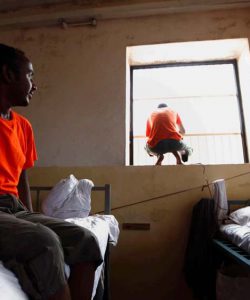
UHSA (Unidade Habitacional de Santo António) is a temporary centre for irregular migrants who receive an order for removal from Portuguese territory. This centre is managed by the Portuguese Border and Alien Service. In 2007 around 300 people passed through the centre, mainly from Brazil, Morocco and Ukraine. JRS Portugal provided social, psychological, cultural and religious support to irregular migrants in the centre.

Approximately 85 migrants were seem by the volunteer doctor in the Medical Aid Office. In addition to direct appointments, the office also provided referrals to specialists in other fields such as dentistry, psychiatry, gynecology etc.

During 2007 JRS commenced a psychological support project. The service was initially offered part-time and then, following the appointment of a clinical psychologist, operated on a full-time basis. Between January and August 2007, 11 individuals received a total of 40 sessions. From September to December, however, the number rose to 18 and the number of sessions to 70.

The project helped to identify a relationship between the psychological distress presented by the migrants and their social, medical and legal situation. For this reason, being able to provide a multidisciplinary response to clients’ needs was a major strength for JRS Portugal.


Integration

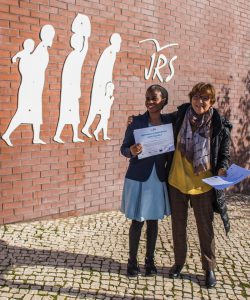
JRS Portugal ran a number of projects aimed at integrating migrants and refugees into Portuguese life. In 2007, 45 migrant nurses successfully participated in the Recognition for Qualification of Nurses project. The UNIVA project, a collaboration between governmental agencies and NGOs, provided support for young people and adults by helping them to solve integration and employment problems. In 2007, UNIVA interviewed 2,751 migrants. The main referral areas for employment were: construction, housekeeping and care services.

The Local Centre for Migrant Support offered information and materials to help welcome and integrate migrants. The centre offered information on legalisation, the renewal of documents, requests for Portuguese nationality, education, health rights, and voluntary return. In 2007, 712 individuals visited the Local Centre. The Local Centre was also a source of information for many Portuguese employers.

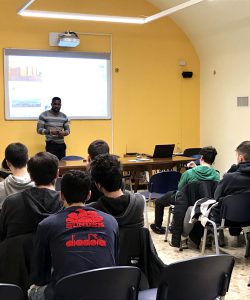
In October, 91 migrants participated in Portuguese classes run by volunteers from JRS Portugal.

Awareness Raising

During 2007, the ‘Welcome to our country’ project ended. The main objectives of the project were to encourage positive attitudes and community building in order to support better integration, to raise awareness of migrant issues and encourage reflection about them within the school community. In total, around 40 schools were visited and 2,000 people were involved in the sessions.

JRS Portugal participated in several debates and conferences, and occasionally, in events promoted by the printed media, radio and television. A quarterly newsletter was distributed to about 1800 people.


Contact Details


Mr Andre Jorge, Country Director
Serviço Jesuíta aos Refugiados, Rua 8, ao Alto do Lumiar Lote 59 1750 Lisboa
Tel: +351 93 754 1620 - Tel/Fax: +351 21 754 1625

portugal(a)jrs.net

To send an email, just replace the (a) with @.


Jesuit Refugee Service Europe - Rue du Progrès (Vooruitgangstraat) 333/2 - B-1030 Bruxelles - Belgium
Tel: + 32 2 250 32 20 - Fax: + 32 2 250 32 29 - Email: europe(a)jrs.net