Home
About JRS Europe
Refugees, Asylum Seekers & Migrants
EU Policy & JRS Advocacy
Archive
Detention in Europe
Pedro Arrupe Award 2006-07
Research Project: Destitution in Europe
World Refugee Day

Accompany
Detainees

Country Offices

JRS Worldwide
How to help
Jesuit Internship
Contact
Links


JRS Slovenia -
http://www.rkc.si/jrs/
 

Pollitical Developments
Two major events defined 2008 for Slovenia. For the first six-months of the year, Slovenia presided the European Union for the very first time, leading many meetings on issues such as irregular migration, harmonization of the asylum system, organised crime, and the Schengen area. Also, during the Slovenian presidency the Return Directive was accepted.

In September, parliament elections were held, which brought a change in the political makeup of the Slovenian government. After 4 years of opposition, the left wing coalition won the election. There emerged a substantial hope that the new government would be more open to changes regarding issues on migration and asylum law.

Due to political and socio-economic factors, Slovenia attracted people on their way to EU, many from former Yugoslavia. Some wished to stay in the country, while others continued their journeys to other EU countries. In 2008, the single biggest group of asylum seekers came from Turkey, while collectively, the biggest groups came from the Balkan region. 

With the independence of Kosovo, the situation in the country improved, but was far from stable. There was considerable fear that with independence, tensions would arise and that many would have to leave the country - such fears can be understood when one looks at the multi-ethnic province of Vojvodina in the north of Serbia. There remains some way to go before stability and integration into EU can be achieved for these countries in the West Balkans .

According to official governmental figures in 2008, there were 260 people seeking asylum, a decrease on the 2007 figure of 434 - this drop is consistent with trends observed in the last number of years.

The year saw an increase of the so called ‘Dublin II cases’, as many asylum seekers requested asylum in Slovenia, but later left for other EU countries. Refugee status was granted to just 4 people in 2008; 9 people received such status in 2007.

In December, on her first visit to the asylum house in Ljubljana, Ms Katarina Kresal, the new minister for Home affairs, stated she would like to raise the standards of international protection for asylum seekers. With this statement, one envisages the change of the asylum law (Zakon o mednarodni zašciti), which was harmonized with the appropriate EU directives and came into force in January 2008. The coalition of NGOs, of which JRS is a part, will influence the debate on changing certain amendments of this law (largely considered to be too strict).

JRS Activities

JRS’ biggest achievement of 2008, in the European year of intercultural dialogue, was the opening of the multi-religious ‘Room of silence’, in the Postojna detention centre. It was the desire of many detainees to have such a room (found during research for the 2007 EU project, ‘Administrative detention of asylum seekers and illegally staying third country nationals in the 10 new member states of the EU’). The room provided detainees of different religious denominations with a place where they can pray, meditate or simply be silent.

The project was led by the JRS Slovenia Country Director, Robin Schweiger, along with the chief of the detention centre. The new room was officially opened by Dr Zdenka Cebašek-Travnik, the Human Rights Ombudsman of Slovenia, with a representative of the Islamic and Orthodox communities, a representative of the police headquarters and staff of the detention center present at the opening. The occasion was also a chance to share experiences and good practices in serving illegal migrants.


Volunteer work
Training of Volunteers
In 2008, JRS put much emphasis on the training of volunteers. JRS organized four seminars for the volunteers working in the Asylum home (Ljubljana) and in the Detention Centre (Postojna), with seventeen volunteers completing the training programme. Besides these seminars, the volunteers attended regular two-hour monthly meetings to discuss issues encountered in their work. Many volunteers availed themselves of the opportunity to meet with the JRS social worker, in order to improve their capacities to deal with the needs of their beneficiaries.

Visiting Detention Centre (Postojna)
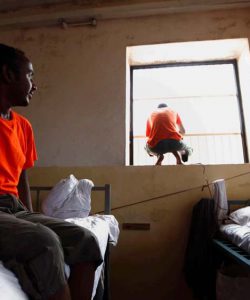
JRS Slovenia visited the Detention Centre in Postojna twice a week. The number of detainees varied, but approximately 60 people were constantly present. The main activity of JRS was to accompany the detainees, namely, talking, socializing with them, and playing with the children.

JRS prepared three major events for detainees during the year. On the eve of the Slovenian Day of Culture, JRS presented ‘culture’ through the medium of a Power-point presentation, with singing and the offering of a characteristic Slovene cake, ‘Potica’. In May, a sports event was held, called ‘Games Without Frontiers’, while at Christmas, a concert was held. All the events were a great success, with detainees taking part in singing, playing and performing.

Visiting Asylum home (Ljubljana)
The JRS social worker and volunteers visited people living in the Asylum home four times a week. Here they offered psychosocial suppor, creative workshops, and cultural activities for families, women and children. The JRS social worker helped the children in their education. For the ‘Santa Claus Celebration’, JRS prepared a ceremony, with gifts for 30 children - all in an attempt to ease the burden of being in the Asylum home.

Summer holidays
This year, for the sixth time, JRS organized a one week holiday in August for 34 women and children in Portorož. They came from the Asylum home, with others coming from families who have permission to remain outside the Asylum home.

Awareness raising
Throughout the year, JRS Slovenia broadcast a radio programme on the fourth Tuesday of every month, entitled, ‘Building a more Open Society’. The programme was broadcast on the Catholic radio station ‘Radio Ognjišce’ and focused on refugee, migration and development issues.

Education
Computer courses
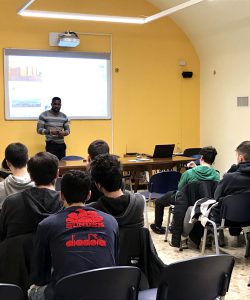
In total, JRS Slovenia organized three computer courses for 24 participants in the computer room housed in the St. Joseph Jesuit spiritual center in Ljubljana. Computer courses were offered for asylum seekers and refugees as a method toward better integration into Slovenian society.


Contact Details

Fr Robin Schweiger SJ, Country Director
Zrinjskega 9 - SI-1000 Ljubljana
Tel : +386-1 430 0058 - Fax : +386-1 430 0059


slovenia(a)jrs.net

To send an email, just replace the (a) with @.


Jesuit Refugee Service Europe - Rue du Progrčs (Vooruitgangstraat) 333/2 - B-1030 Bruxelles - Belgium
Tel: + 32 2 250 32 20 - Fax: + 32 2 250 32 29 - Email: europe(a)jrs.net