Home
About JRS Europe
Refugees, Asylum Seekers & Migrants
EU Policy & JRS Advocacy
Archive
Detention in Europe
Pedro Arrupe Award 2006-07
Research Project: Destitution in Europe
World Refugee Day

Accompany
Detainees

Country Offices

JRS Worldwide
How to help
Jesuit Internship
Contact
Links


JRS Ukraine

Political Developments

Since its first refugee law was passed in 1993, Ukraine has granted status to 5,459 claimants. In 2008, 2,277 of these continued to live in Ukraine while 978 became citizens. However, these figures were very small and did not accurately represent the picture of migration in and through Ukraine - a further analysis of these minimal statistics tell us more.

Of these 5,459 refugees, 5,000 were granted that status before 2002, when the state began to institute standard international procedures, setting up offices for the proper processing of claimants. Ironically, with the sustained help of the European Union, as the various offices in Ukraine have become more defined, better staffed, and accountable, the number of successful claimants has dramatically diminished.


From 2002 to 2007 approximately 400 claimants were granted refugee status. During the same period, particularly following the expansion of the European Union in 2004, the number of migrants in the country dramatically and visibly increased, with all major cities inhabited by significant minorities. Kharkiv had a major Vietnamese community, while the Chinese flocked to Donetsk. Central Africans were regularly seen in Kyiv and Odessa; the Somalis and Sudanese have created a community in Vinnitsa. There were Chechnyans, Georgians, Afghans, Iraqis, Indians, Palestinians, and Russians to be found ubiquitously. They were either in the system applying for status or, more commonly, working illegally under police radar.

To return to the official statistics, of those granted status 1,171 were from Afghanistan, 652 from former Soviet republics, 239 from Africa, with representations from Iraq, Pakistan, Vietnam, Korea, China, and elsewhere.

The biggest variable in Ukraine lay in the difference between being apprehended or not, given that Ukraine has no eastern border control. Movement of people and contraband along the frontier with Russia is virtually without supervision. The Ministry of Internal Affairs estimated that 20,000 illegal migrants were dealt with officially in the last five years. There was no even vague estimate on the numbers that passed through without detection. More troubling still were the stories of corruption on the western border where migrants pay the guards for the passage - corruption that exists on both sides of the border.

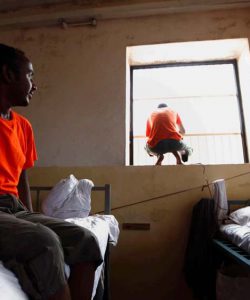
Parallel to the development of procedures and the establishing of regional offices for the processing of refugee applications, the EU helped Ukraine to renovate two former army barracks as detention centres for irregular migrants. This created two such centres in Ukraine, with a capacity of 430 irregular migrants, who, for the most part, awaited deportation. As these centres are new, procedures are in the process of being established. Access to them was made available to JRS and to other agencies.

Although the above statistics are current and official, there are other statistics that suggest much more to the general story of migration in Ukraine. The department of Internal Affairs, for example, estimated that in 2007 there were 4 million foreigners living in Ukraine. This figure included migrants of all kinds: business, students, military, legal and irregular migrants. Furthermore, it is known that the black market is highly active in Ukraine, most notably in the border areas with Moldova and Slovakia. Newspapers sometimes carried stories reporting twenty to forty irregular migrants being apprehended at the border or somewhere within the country. Statistics from 2005 said that up to 150,000 women were trafficked each year from former Soviet republics.

The emigration of Ukrainian citizens, legal and illegal, is thought to have reached as much as 7 million in the first 15 years following independence in 1991. These statistics, while quite broad, at the very least paint a more complicated picture than the official state statistics allow. This is one of the main problems in post-Soviet countries: research and reliable information.


JRS Activities
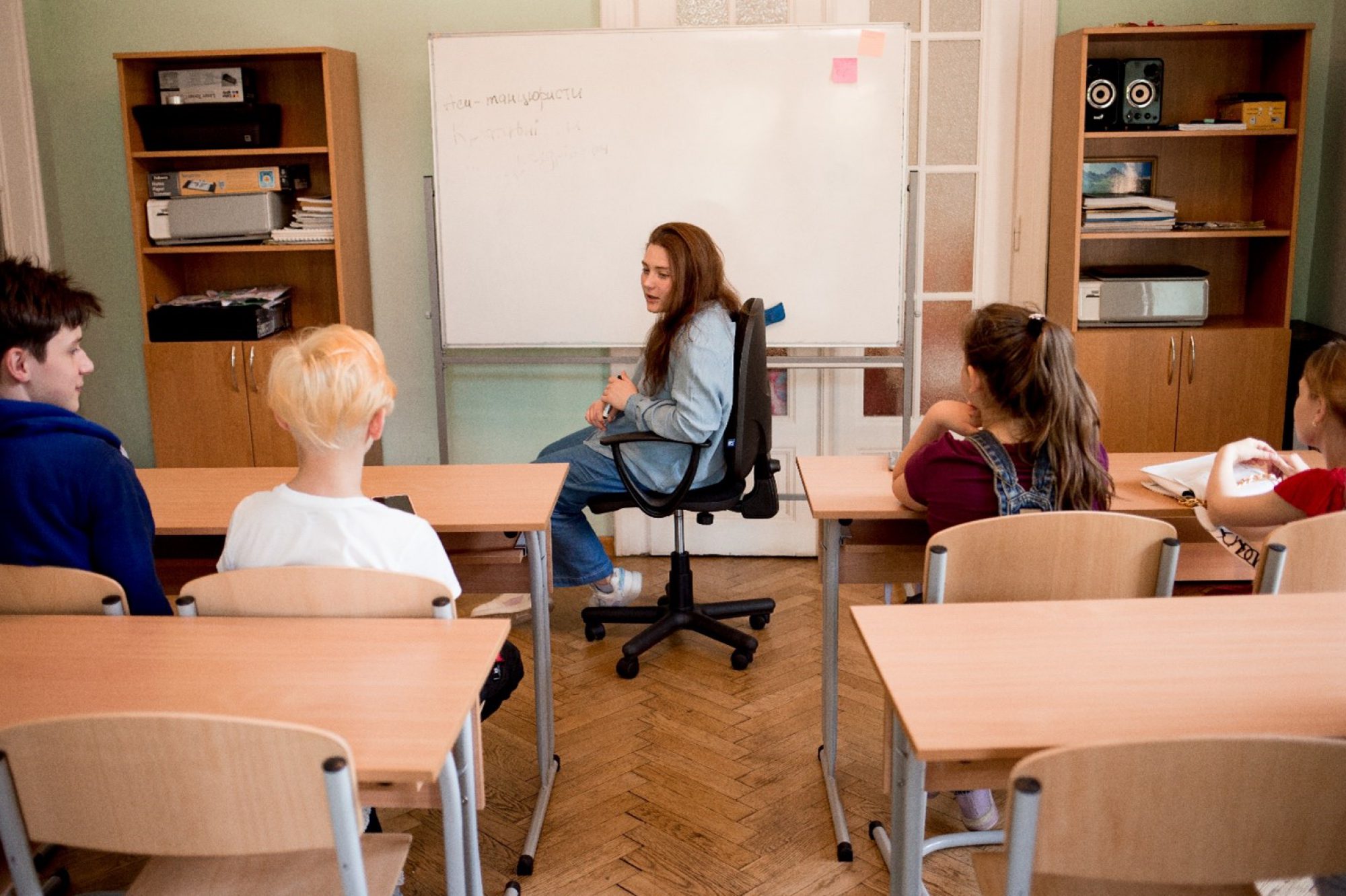
JRS-Ukraine opened its centre on 1 October 2008. Currently, it houses refugees from the war in Abkhazia (Georgia), and from the war in Iraq. It counts among its close collaborators: UNHCR, ERSO, ECRE, Caritas Ukraine, Caritas Austria, NEEKA, and other non-governmental organizations. The culture of NGOs is in its earliest stages in Ukraine, so most of our work in this regard lies in building networks and links for future collaboration.

We also can count on candour and good working relationships with the relevant organs of state: Migration Service, Border Patrol, and police, all of whom have distinct responsibilities with the migrant population. JRS Ukraine has added to its direct work with refugee claimants, researching the statistics behind the individual stories.


Contact Details

Fr David Nazar SJ, Country Director
vul. Luteranska, 6B/ 56 - 01001 Kyiv, Ukraine
Tel: +38 044 278 2978

ukraine(a)jrs.net

To send an email, just replace the (a) with @.


Jesuit Refugee Service Europe - Rue du Progrès (Vooruitgangstraat) 333/2 - B-1030 Bruxelles - Belgium
Tel: + 32 2 250 32 20 - Fax: + 32 2 250 32 29 - Email: europe(a)jrs.net