|
Daily Routine in Malawian Dzaleka refugee camp – a
quest for survival
Temperatures
are cool at the open settlement of the Dzaleka refuge
camp. The July winds are considerably stronger
here than in the capital, Lilongwe. I am
immediately surrounded by children of all ages
expressing their excitement at the occasional sight of a
‘mzungu’ – a white person. Some of them have never seen
a white man and they stare with awe. But others have
learnt that mzungus are warm and trustworthy. They
would run up and embrace their white strangers.
According to the deputy camp administrator, Mr Ngoma,
the biggest single refugee group at the camp are the
Rwandese, numbering somewhere around 3,845. The
Congolese follow next with at roughly 2,725, and the
refugees from Burundi amount to about 2,355. The
atmosphere in the camp is generally peaceful: the
refugees have seen enough war and conflict. There are
minor tensions of ethnic basis, but they tend not to
escalate. The camp welcomes a few hundred Somalis and
Ethiopians every month. However, the these two
groups rarely stay in the camp and get themselves
smuggled out before long (mainly to South Africa).
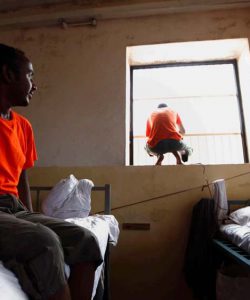
The camp’s inhabitants stay in brick houses with straw
roofs, or build their own huts out of sandy clay bricks.
The living conditions vary a great deal: some dwellings
have no windows or doors and only have small holes in
the walls to allow in some light and fresh air; while
some have electricity.
Some refugees have no entrance door to their house, yet
they will own a cell phone with Internet access, or they
will have no cooking sets for their food, but own a
working TV. I guess the notion of necessities is
different for people who once lived a life in abundance
and then lost it all in a matter of minutes. Keeping
these things from their past that connect them to the
outer world is essential for them to be in touch with
the normality of life.
Otherwise, the poverty of the camp’s inhabitants is
striking. Every individual at the camp receives a
minimum monthly “package” consisting of 13.5 kg of maize
(rice), 1.8 kg of beans, 1750 g of cooking oil, 450 g of
sugar and 150g of salt distributed by Red Cross in
cooperation with the World Food Program. Apart from
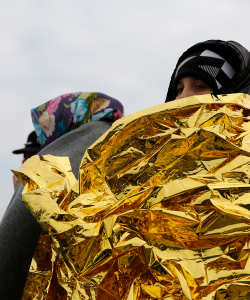
that, the Red Cross distributes blankets, soap, towels
and cooking sets to new arrivals but these food supplies
and commodities are scarce.
“We serve cooked food only to new arrivals every day,”
says Cecilia Banda, a social affairs officer with the
Red Cross. “The way from the northern reception point of
Karonga to Dzaleka is very long and they are hungry upon
arrival.”
In
addition to the supplies and food distribution, the Red
Cross is also running a community services program,
including registration of newborns, raising awareness of
contraception possibilities and gender-based violence.
They also run an orphan care committee. The Red Cross is
responsible for tracing services or finding relatives in
other countries and camps to reunite families. They also
arrange recreational activities such as football games,
basket weaving for women, book reading and games outside
the district with Malawians.
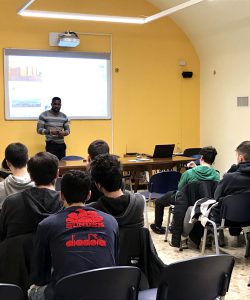
The fundamental principles of every child’s right to a
primary education set by the UNHCHR Convention on the
Rights of the Child in 1989 are fulfilled here by the
Jesuit Refugee Service. Not only do they run primary
schools for the refugee children and local Malawians,
but they are also building a secondary school. These
initiatives have not been easy to implement due to the
shortage in funding and difficulties with obtaining
permissions from the government.
The Malawian government’s share in the running of the
camp includes a security unit consisting of four
policemen, the administration of the camp and
coordination of the NGO activities in the camp
territory, a constructed water pipeline and personnel
for the local clinic donated by UNHCR.
“We have no doctors at this hospital,” says the clinical
officer Mr Katuli. The hospital is served by largely
uneducated clinical assistants, four nurses and Mr
Katuli who received a clinical officer education three
years ago. They deal with minor injuries and give
vaccinations; serious illnesses are treated at a
district hospital 9 km away from the camp.
Since 2003 the hospital has had 17,166 references from
Malawians and 9.700 from the refugees. The most common
problem according to Mr Katuli is irrelevant visits.
“They come with any other demands than medical:
complaints of malnutrition, lack of blankets and cooking
facilities” – he claims, with a painfully realistic
conclusion: "The refugees will hardly tell you the truth
about their lives as it is, even though its bad enough
as it is."
|