|
Refugees family finds no protection in Ukraine
A refugee
recounts her family’s experience of detention and abuse
in Ukraine
(Brussels, 29
June 2011) – Marina is a 38-year-old Afghan mother of
four. She came to Ukraine fleeing from war and danger in
Afghanistan, but her journey was not a direct one. “I
went to Pakistan, then to Iran, Turkmenistan and then to
Tajikistan,” she recounts. This was in 1998, and in
Tajikistan refugees were being deported to Afghanistan.
Fearing this, she and her family decided to leave for
Russia.
Hakimi remembers
the journey: “We were driven in two separate cars. In
the first, there was my son and my husband’s mother,
sister and brother. My son was two years old. I was in
the second car with my husband, sister and six-month-old
daughter. The first group crossed the border into
Russia. Our group was stopped by the police and deported
to Tajikistan, and then to Afghanistan.” Tragically she
was separated from her oldest son.
Back in
Afghanistan, Hakimi and her husband faced harassment
from the Taliban. “They had problems with me because I
was deported from Russia. They told me: ‘you are a
communist!’”
United States
and coalition forces had by now gained control of
Afghanistan. One night, ISAF forces came to their house
in search of Taliban fighters. Hakimi’s husband told the
soldiers that their neighbours were in the Taliban; soon
after the neighbours were arrested. Some time later,
someone fired gunshots at her husband while he was
working. He didn’t know who had done it. At 11:00pm that
night, Hakimi’s daughter heard the doorbells ring. Her
husband went outside and saw a group of Taliban, armed,
with concealed faces. They were taking people away. “The
Taliban are very dangerous people,” says Hakimi, “they
kill.” The family spent all night awake; in the morning
they went to a friends house and stayed there for ten
days.
They decided to
leave Afghanistan once more. By now, Hakimi was parted
from her son for two years. “I am his mother. I am sick
because my son has lost me.” Thinking of her son, Hakimi
and the family left for Moscow, and then to Ukraine. It
was now 2009. In Ukraine, her husband contacted his
mother and brother, who encouraged the family to meet
them in Germany, where they now lived.
The journey
proved to be very difficult. The police intercepted them
at the Ukraine-Polish border. “The police caught me and
I began shouting. My children saw my crying, thinking
that maybe I would die. I had to be hospitalized and
given an injection”, says Hakimi. The police took the
family to Lutsk city jail. “This was a hard time,
especially for my children. While other children were
playing outside and going to school, mine were in jail
for one month.”
Afterwards they
were transferred to a detention centre, where they
stayed for six months. “The detention centre was like a
jailhouse”, remembers Hakimi. Her husband was kept in a
separate cell, and not allowed to keep contact with her
and the children. “We feared he was on a flight,
deported.”
At one point
Hakimi’s daughter became sick; they went to the
hospital, leaving the other children behind. Her husband
inquired, “Where is my wife and daughter?” A guard asked
him, in Russian: “Do you want a problem?” Not knowing
the language, the husband answered, “Yes”. Two soldiers
and an officer came and took her husband away. “In a
closed room they beat him for 10-20 minutes on his back
and legs. My husband didn’t cry out so that the children
wouldn’t hear. When the guards opened the door, my
children saw their father. It was very bad time for
them.”
Returning from
the hospital, Hakimi was allowed a five-minute visit
with her husband. She saw that he was very sick and worn
from the beating. “Then he was taken away and put in
solitary confinement for ten days. He had only three
small meals each day. He couldn’t see his children.”
After six
months, Hakimi and her family were released from
detention and sent to the JRS accommodation centre. This
was a positive change: “Now I am glad. Thank God. My
children can go to school.” But all was not yet well:
Hakimi had sent two asylum applications to the
authorities, but both were rejected.F
Her son visited
from Germany. For Hakimi, too many years had passed
since their last encounter. “The last time I saw him he
was two. Now he was 14 and big. A man. I held him and
cried. He saw my other son and daughter for the first
time. Everyone was so happy.” Their happiness was short
lived, since the son eventually had to return to
Germany. “He is very sad”, says Hakimi, “he is always
thinking about his family.”
Despite having
experienced great difficulties, Hakimi holds on to a
dream of a future where the entire family can be
together in a safe place. “I want to live together with
my older son. I am a mother, and a mother loves her
children. I want to have a house, a good life for my
children.”
Contact
Information:
Philip Amaral,
Policy
and Communications Officer
JRS Europe
Tel: +32 2 250 32 23; Mobile: +32 485
173 766;
europe.advocacy@jrs.net;
www.jrseurope.org
Notes to
the Editor:
-
This article
is a summary of Hakimi Marina’s pre-recorded video
testimony, presented at a JRS press conference on 29
June at the Residence Palace in Brussels, to release
a new report, No Other
Option: Testimonies from Asylum Seekers Living in
Ukraine.
The report is based on face-to-face interviews with
asylum seekers, Ukrainian authorities and civil
society organisations.
-
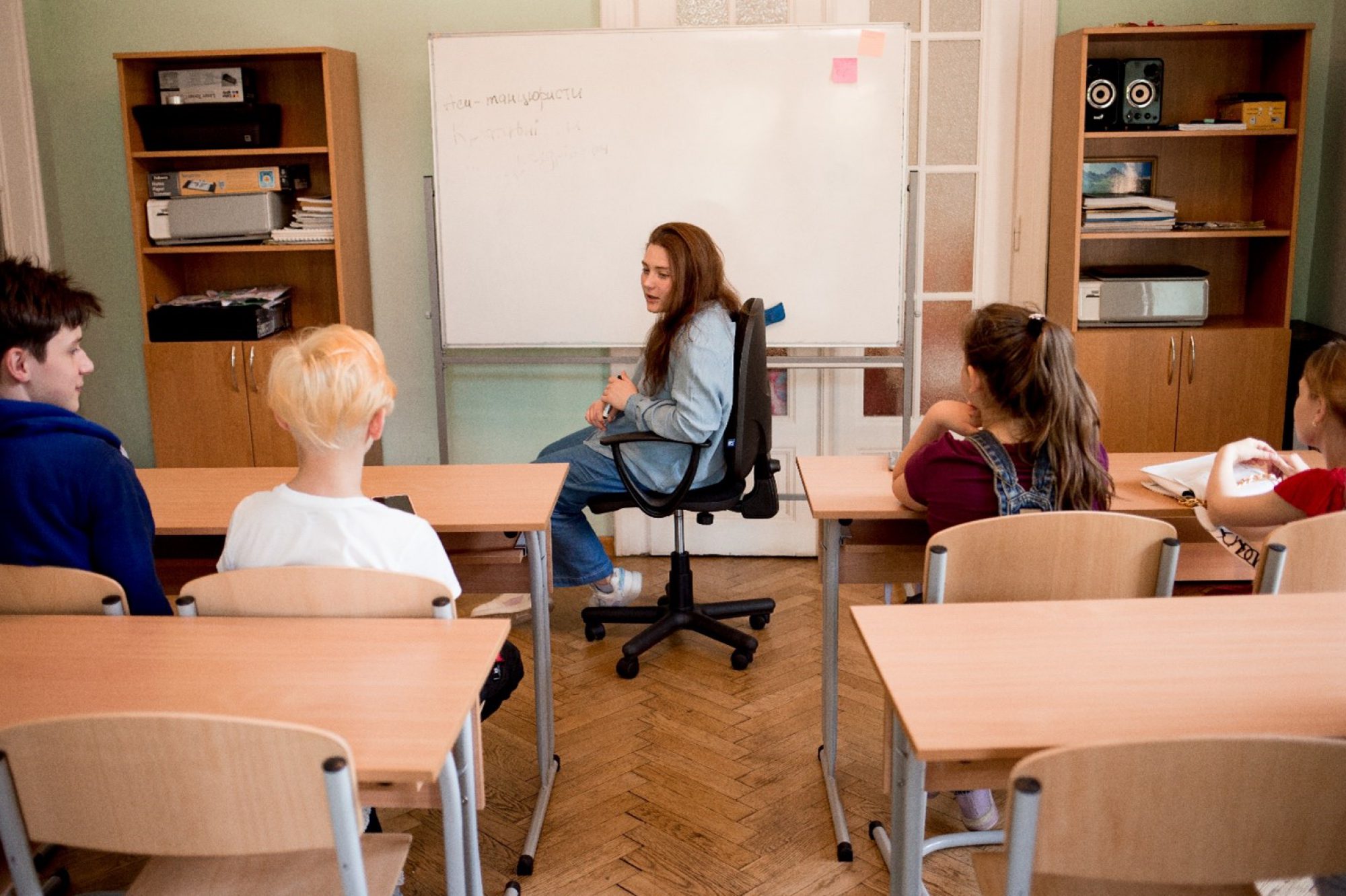
Since 2008,
JRS Ukraine has run an accommodation centre in Lviv,
near the western border of Ukraine, providing
temporary housing to asylum seeker and refugee
families, as well as vocational assistance, language
courses and access to medical care.
-
JRS is
present in 50 countries around the world. The 14
offices in Europe provide direct services to
migrants and their families, including material help
such as food or shelter, as well as legal advice and
social support. JRS staff and volunteers visit
migrants in detention.
|