Refugees left unprotected in Ukraine

EU-Ukraine relationship leaves refugees without basic rights

(Brussels, 29 June 2011) – A new JRS report reveals that asylum seekers in Ukraine are left with access to basic services and adequate asylum procedures. The report, No Other Option, features testimonies from asylum seekers and examines bilateral relations between the EU and Ukraine, and their negative impact on refugee protection in the country. The report was launched at a press briefing today in Brussels.

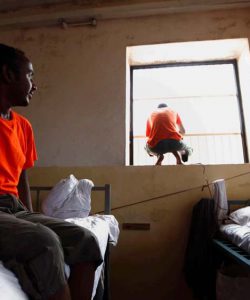
The briefing began with a pre-recorded testimony from Marina Hakimi, an Afghan refugee living with JRS in Ukraine. She told of the hardship she and her family has suffered, both in transit to Ukraine, and then in a detention centre near the northwest border of Ukraine: “The detention centre was like a jail house,” she stated. Mrs Hakimi and her family fled Afghanistan following threats to their lives by the Taliban.

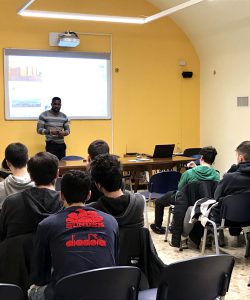
JRS Ukraine director David Nazar (pictured) painted a picture of the complexities that exist in Ukraine, stating that while '”things have improved over the last eight years,'' social, economic and political problems continue to hinder the country’s ability to provide adequate protection to asylum seekers.

According to JRS Europe senior policy officer, Stefan Kessler, Ukraine’s inability to provide protection now may lead to bigger crises in the future. ''There is no tragedy happening at the moment, but the situation in Ukraine is far from good. The human rights of migrants who are in need of protection are not being fully respected,” he said.

He claimed that the EU-Ukraine readmission agreement ''lacks any sufficient guarantee for the full respect of human rights, because the agreement does not foresee any mechanism for monitoring the treatment of migrants who are returned to Ukraine.''

Considerable improvements have been made for asylum seekers in Ukraine in recent years, thanks mainly to the provision of EU funds. This financial support, however, is not being properly accounted for, claimed Kessler as he called on the EU to ''hold Ukraine accountable for what EU money is spent on and to suspend – at least partly – the readmission agreement'' with Ukraine.

Also in attendance was Ska Keller MEP (Greens, Germany), who described the JRS report as both ''shocking and enlightening.'' She issued a scathing attack on Ukraine’s inability to provide protection to asylum seekers, stating that the report shows people, who despite possessing a ''clear asylum case,” are ''not being granted asylum'' and are being ''detained without reason''.

Referring to the testimony by Marina Hakimi, who told of her husband being beaten by detention centre guards, Keller asserted that ''beating someone is a severe human rights breach.'' Ms Keller shared Mr Kessler’s concerns about the EU-Ukraine readmission agreement, arguing that such agreements should not “prevent people from claiming asylum.”

Representatives of the Ukraine Mission to the EU were on hand to comment. While they admitted their appreciation for the report, they were less than enthusiastic with its findings. Ukraine, they claimed, was ''right on track...we think that the readmission agreement is working.'' They urged attendees not to “take dramatic stories at face value”, arguing for the need to explore all sources of information before determining whether someone is in genuine need of protection.

Yet the refugee stories in the JRS report testify to a variety of genuine protection needs that are ignored by the Ukrainian government. According to David Nazar, many asylum seekers he meets with have visible physical evidence of persecution. “One asylum seeker I met had four bullet wounds, and another was tortured in Chechnya for three months.”

Since 1993, only 5.459 persons have been given refugee protection in Ukraine. Until recently, three separate ministries oversaw refugee policy. The sheer complexity of seeking asylum in Ukraine makes it nearly impossible for anyone with genuine protection needs to obtain a refugee status.

****

Contact information:

Philip Amaral, Policy and Communications Officer

JRS Europe

Tel: +32 2 250 32 23; Mobile: +32 485 173 766; europe.advocacy@jrs.net; www.jrseurope.org

Notes to the Editor:

  • The JRS report, No Other Option, and a summary of Marina Hakimi’s testimony, is available for download on www.jrseurope.org

  • JRS is present in 50 countries around the world with a mission to accompany, serve and advocate for refugees, asylum seekers and the forcibly displaced. The 14 offices in Europe provide direct services to migrants and their families, including material help such as food or shelter, as well as legal advice and social support. JRS staff and volunteers visit migrants in detention.

  • Since 2008, JRS Ukraine has run an accommodation centre in Lviv, near the western border of Ukraine, providing temporary housing to asylum seeker and refugee families, as well as vocational assistance, language courses and access to medical care.


Jesuit Refugee Service Europe - Rue du Progrès (Vooruitgangstraat) 333/2 - B-1030 Bruxelles - Belgium
Tel: + 32 2 250 32 20 - Fax: + 32 2 250 32 29 - Email: europe(a)jrs.net